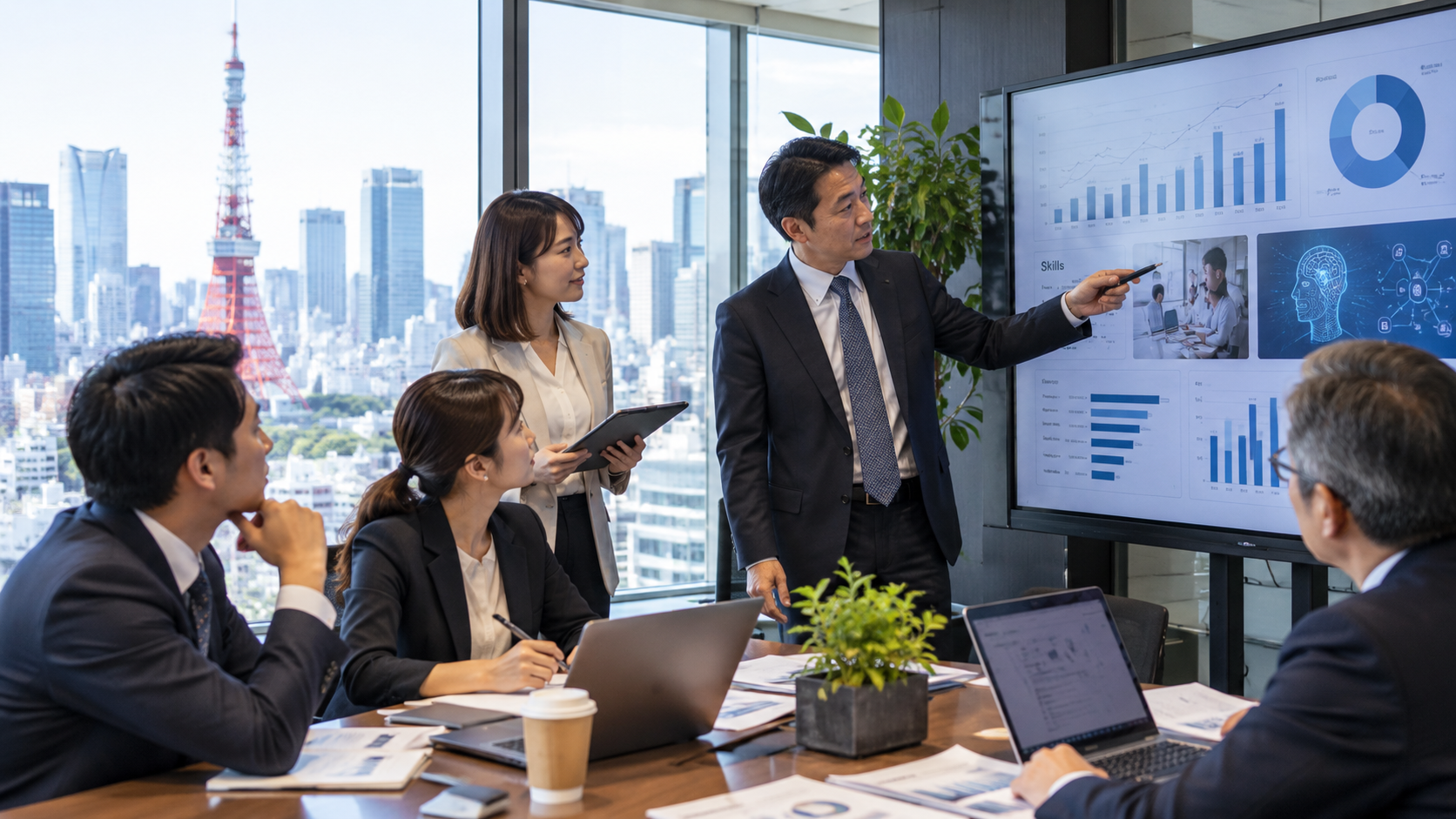
Japan is strengthening workforce development and reskilling as demographic pressures, digitalization and AI transform skills demand. The shift offers HR leaders across Asia a timely lesson: future workforce competitiveness will increasingly depend on continuous learning, skills visibility and deliberate job redesign.
Japan’s Workforce Strategy Enters a New Phase
Japan is confronting two major workforce changes at the same time: a tightening labor supply and rapid technological transformation. For HR leaders, this combination is changing the traditional approach to workforce planning. Organizations can no longer depend only on recruiting externally whenever new capabilities are required. Developing existing employees is becoming an increasingly important part of long term talent strategy. In March 2026, Japan’s Ministry of Health, Labor and Welfare adopted its 12th Basic Plan for Human Resources Development, covering fiscal years 2026 to 2030. The plan identifies rapid industrial change and labor-supply constraints associated with population decline as major challenges and calls for strategic development of talent required by growth industries.
Japan continues to operate career-development and reskilling support initiatives, while government supported program is providing businesses with practical learning opportunities. September and October 2026 program include sessions focused specifically on practical AI adoption and developing people capable of supporting AI and digital transformation within smaller businesses. This matters for HR because reskilling is moving closer to everyday workforce management. Instead of treating training as an occasional employee benefit, organizations increasingly need to identify which capabilities are becoming obsolete, which are becoming more valuable and where employees can transition into new responsibilities. Technical knowledge remains important, but AI enabled workplaces also increase the value of capabilities that technology cannot independently provide judgement, communication, problem solving, leadership, creativity and contextual decision making. Japan's Ministry of Economy, Trade and Industry has previously highlighted skills gaps associated with generative AI and structural workforce shortages while advocating a more skills-based approach to developing digital talent.
A successful reskilling program should not simply teach employees how to use a particular AI platform. It should help them understand how technology changes their role and how human expertise can complement automation. Many organizations know employees' job titles, departments and years of service but have limited visibility into the actual skills distributed across their workforce. That makes workforce transformation difficult. HR teams can respond by developing skills inventories, competency frameworks and internal talent marketplaces that provide a clearer picture of what employees can already do and what they could potentially learn. This approach can also support internal mobility. When a role changes because of automation, an organization may discover that an employee already possesses transferable capabilities suitable for another business function. At the ASEAN+3 Labor Ministers Meeting held in Bangkok in August 2026, participating countries discussed skills qualification recognition and the need for cooperation as digitalization changes working environments and skills demand.
This reflects an increasingly regional workforce challenge.
Asian economies differ significantly in demographics, industries and labor market structures, but employers across the region are confronting similar questions about AI, digital capabilities and future skills. For HR leaders, the opportunity is to make workforce development more proactive. That means identifying emerging skills before shortages become critical, connecting learning program to real career opportunities, encouraging internal mobility and giving managers greater responsibility for developing their teams. From Training Employees to Building Adaptable Workforces The most important change may ultimately be cultural. Reskilling works best when employees do not view learning as something required only when their current skills become outdated. Continuous development needs to become a normal part of working life. For organizations, that requires time, accessible learning opportunities and visible career pathways. Japan's evolving workforce strategy illustrates how closely technology strategy and people strategy are becoming connected. The organizations best prepared for the next phase of AI may therefore not simply be those that acquire technology fastest. They may be those that create workforces capable of continually learning alongside it.