Singapore’s Workplace Conversation Is Changing
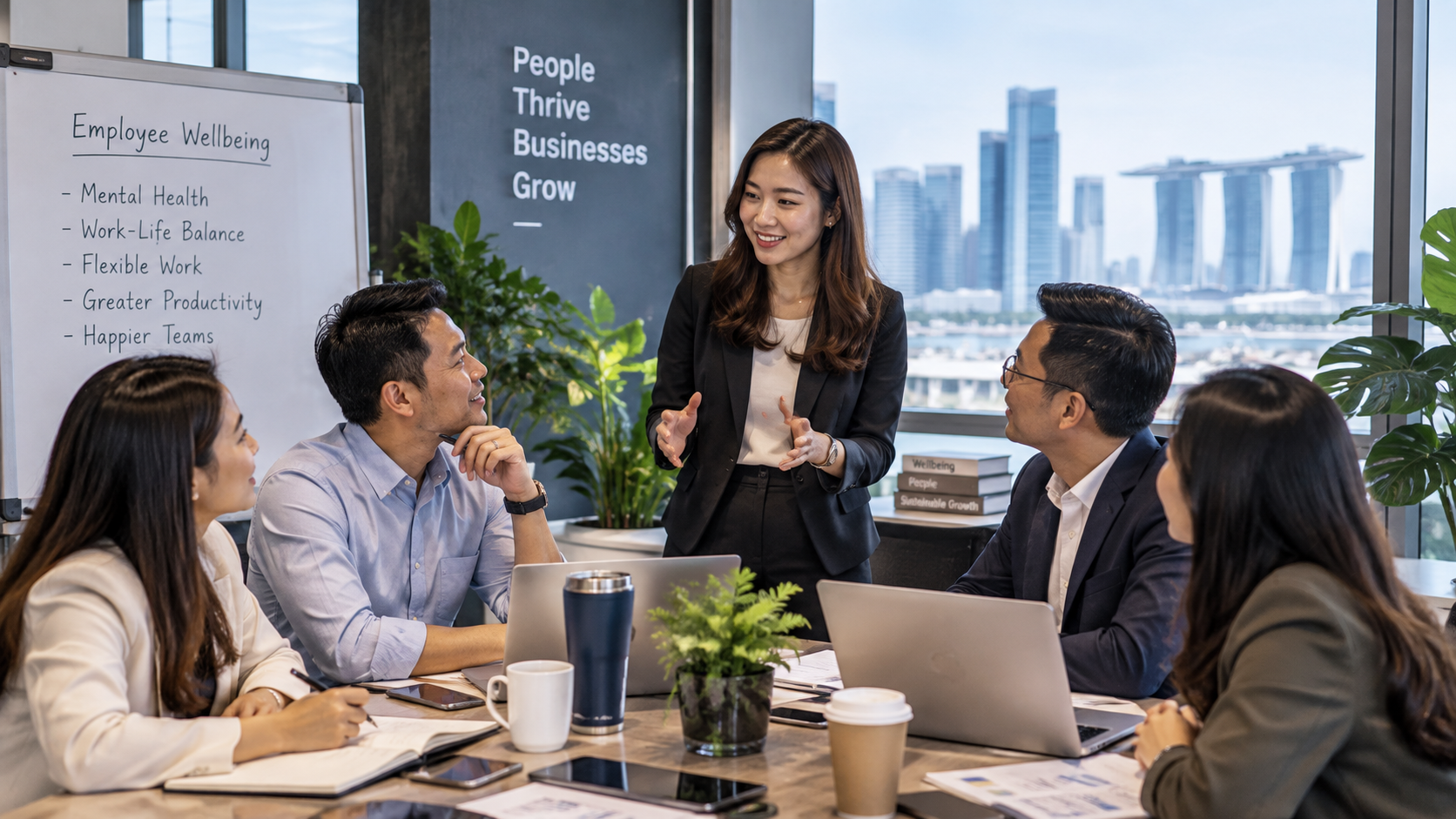
For years, workplace wellbeing was often associated with occasional wellness program, employee activities or additional benefits. Today, the conversation is becoming much broader. In Singapore, employers are operating in an environment shaped by flexible work expectations, demographic change, skills shortages and growing attention to sustainable employment practices. For HR leaders, this means employee wellbeing can no longer sit separately from workforce strategy. How people work, how managers lead and how organizations design jobs can all influence whether employees are able to perform sustainably.
One of the clearest changes has been Singapore's formalization of flexible-work conversations. The Tripartite Guidelines on Flexible Work Arrangement Requests took effect on 1 December 2024. They establish a formal process through which employees can request flexible work arrangements and require employers to properly consider those requests. The guidelines do not mean every request must be approved. Instead, they create a structured approach to communication between employers and employees. Flexible working is increasingly less about simply deciding whether employees should work from home. It can involve flexibility in where, when and how work is performed, while organizations still consider operational requirements and business needs.
Wellbeing and Performance Are Not Opposing Goals
A common misconception is that organizations must choose between employee wellbeing and high performance. In practice, sustainable workforce strategies increasingly try to support both. Singapore's Ministry of Manpower has highlighted workplace mental wellbeing within its broader workplace health and employment resources, while tripartite partners have developed guidance to help employers strengthen mental wellbeing practices. For organizations, this moves the conversation beyond wellness campaigns. Managers need to consider workload, communication, psychological safety, workplace relationships and whether employees feel comfortable seeking support. A wellbeing strategy becomes more credible when these principles are visible in everyday management rather than appearing only during special initiatives.
Managers Are Central to the Employee Experience
HR can create policies, but employees experience the organization largely through their managers. A flexible-work policy means little when managers discourage employees from using it. A mental wellbeing program has limited impact when workloads remain consistently unrealistic. An employee-feedback survey achieves little when teams never see action following their feedback. This is why manager capability deserves greater attention within wellbeing strategies. Managers need the skills to recognize changing employee needs, conduct constructive conversations, allocate work fairly and maintain performance expectations without creating an unnecessarily unhealthy working environment. For HR departments, developing these capabilities can be just as important as introducing another employee benefit.
Another challenge is that there is no universal definition of the ideal employee experience. A young professional beginning a career may priorities mentoring, learning opportunities and social connection. A working parent may place greater value on scheduling flexibility. An experienced professional could priorities autonomy and meaningful responsibilities, while employees caring for older family members may require different forms of flexibility. Singapore's ageing population makes this particularly relevant. Workforce strategies increasingly need to accommodate employees at different life and career stages rather than assuming that one employment model works equally well for everyone.
The next step for HR is to connect wellbeing with workforce data. Instead of measuring only participation in wellness program, organizations can examine indicators such as employee turnover, absenteeism, engagement, internal mobility, overtime patterns and feedback from employee surveys. These indicators should not be interpreted individually, but together they can help HR identify areas where workforce pressure may be developing.
Short pulse surveys, manager conversations and structured feedback channels can help organizations understand problems earlier rather than waiting until employees resign.
A Wider Lesson for Asian Employers
Singapore's experience reflects a larger change taking place across Asian workplaces. Employees are increasingly evaluating organizations not only according to salary and career progression, but also according to flexibility, leadership quality, workplace culture and the overall employment experience. At the same time, businesses still need productivity, accountability and strong performance. The role of HR is therefore not to choose one side. It is to design workplaces where employees can contribute effectively without making unsustainable working practices the normal route to achieving results. The future of workplace wellbeing may ultimately depend less on how many wellness benefits an organization offers and more on how work itself is designed. Flexible arrangements, capable managers, realistic workloads, meaningful development and open communication all contribute to that environment. For Singaporean businesses and HR leaders throughout Asia this represents an important shift.
Employee wellbeing is becoming more than an HR initiative. It is becoming part of how organizations build resilient, productive and sustainable workforces.