

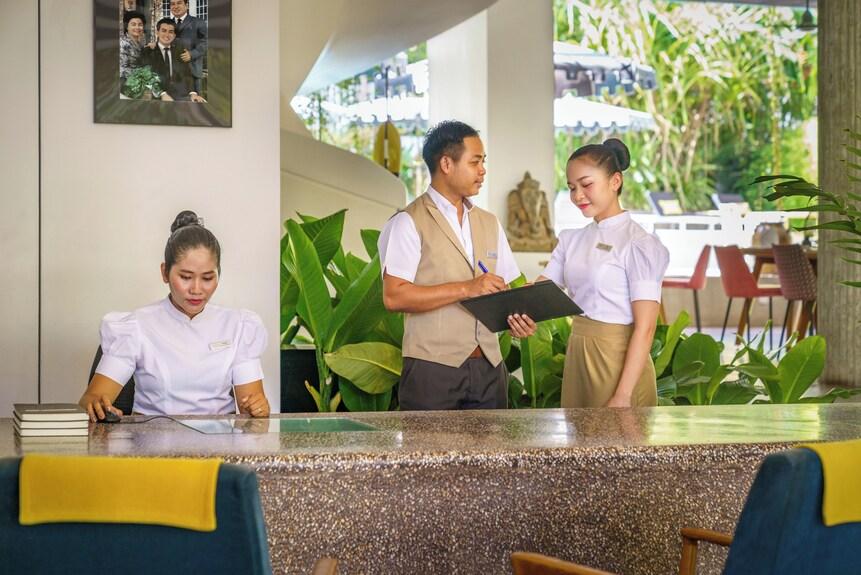
Cambodia’s hospitality and tourism industry represents an important source of employment, business development, and economic opportunity, with destinations such as Siem Reap, Phnom Penh, and Sihanoukville attracting investment in hotels, resorts, restaurants, and tourism services. As the industry adapts to evolving international travel patterns, digital booking platforms, changing guest expectations, and competition from established tourism destinations across Southeast Asia, hospitality executives are recognizing that long term business success depends on more than attractive properties, modern facilities, and effective marketing strategies. It increasingly requires a skilled, motivated, and professionally developed workforce capable of delivering memorable customer experiences. In this illustrative executive interview, the central leadership discussion focuses on how Cambodian hospitality businesses can move beyond traditional staffing models and establish stronger talent development strategies. From the perspective of a senior hotel industry executive, the greatest challenge is not simply recruiting employees to fill operational vacancies but developing professionals who understand service excellence, demonstrate strong communication capabilities, and possess the confidence to manage increasingly diverse guest expectations. Within hotels and resorts, employees working in front office operations, food and beverage services, housekeeping, guest relations, and administration contribute directly to the customer experience, making workforce capability an essential component of business performance. However, many employees enter the hospitality industry through operational positions without clearly defined opportunities to develop into supervisory or managerial roles. Business leaders therefore have an important responsibility to create transparent career pathways that connect practical experience with structured professional development. A front office associate working at a hotel in Siem Reap, for example, may demonstrate strong customer communication skills and problem solving abilities that could support progression into guest relations management or hotel operations leadership. Similarly, experienced food and beverage employees may possess the operational knowledge required to supervise service teams when provided with appropriate coaching and management training. By recognizing leadership potential across different employment levels, organizations can reduce excessive dependence on external recruitment while preserving valuable service knowledge. The executive perspective presented here emphasizes that workforce development should become an integral part of hospitality business strategy, enabling organizations to strengthen employee commitment, maintain consistent service standards, and prepare for future industry growth.
A second important theme in this executive perspective concerns the relationship between employee experience, leadership behavior, and customer satisfaction. Hospitality professionals frequently operate in demanding environments that require flexibility, emotional intelligence, teamwork, and the ability to respond calmly to unexpected situations. Employees may manage difficult guest interactions, changing reservation requirements, demanding service schedules, and operational responsibilities during peak tourism periods. Under these conditions, the quality of workplace leadership can significantly influence employee confidence, engagement, and professional performance. From the perspective of a Cambodian hospitality executive, creating a positive employee experience requires more than providing competitive compensation or introducing occasional recognition programs. It involves establishing a workplace culture where employees feel respected, receive constructive guidance, and understand how their contributions support the organization’s reputation and commercial objectives. Hotel managers and department supervisors must therefore develop the ability to coach employees, communicate expectations clearly, and recognize individual strengths while maintaining operational discipline. In Cambodia’s hospitality industry, where employees may serve guests from different cultural and linguistic backgrounds, professional development should also include communication skills, cultural awareness, conflict resolution, and practical decision making. These capabilities help employees manage challenging situations with greater confidence while strengthening the overall guest experience. HR leaders can support these priorities through structured onboarding programs, mentoring relationships, service excellence workshops, and opportunities for employees to gain experience across different operational departments. Cross departmental learning can be particularly valuable because it allows employees to understand how front office operations, housekeeping, food services, maintenance, and guest relations contribute to the overall customer journey. When employees understand these connections, they may become more capable of identifying operational problems and supporting colleagues during demanding periods. However, effective people management also requires organizations to acknowledge the pressures associated with irregular working hours, seasonal employment patterns, and demanding customer service responsibilities. Managers should consider workforce scheduling, employee wellbeing, fair performance evaluation, and accessible professional development opportunities when designing operational policies. Creating opportunities for employees to share suggestions and raise concerns can also strengthen workplace trust and provide management teams with valuable insights into service improvements. Ultimately, hospitality organizations that invest in supportive leadership and meaningful employee development may be better positioned to retain experienced professionals and deliver consistently high standards of service.
Looking ahead, Cambodia’s hospitality businesses have an opportunity to strengthen their regional competitiveness by placing workforce capability and leadership development at the center of their long term growth strategies. As digital technologies influence guest communication, hotel reservations, customer relationship management, and operational coordination, employees will increasingly require a combination of traditional hospitality expertise and modern digital capabilities. In this illustrative executive discussion, the future of hospitality leadership depends on creating organizations where employees are encouraged to learn continuously, adapt to evolving service expectations, and participate in business improvement initiatives. Senior executives and HR leaders can collaborate with hospitality training institutions, educational providers, and industry partners to develop practical learning opportunities that prepare employees for emerging professional responsibilities. Partnerships involving internships, apprenticeships, management development programs, and specialized service training can help establish stronger connections between education and employment while supporting the development of local talent. Organizations should also consider how leadership succession planning can improve operational continuity, particularly as experienced managers assume regional responsibilities or move into more senior executive positions. Identifying employees with strong leadership potential and providing structured opportunities for professional advancement can strengthen internal management pipelines and reduce disruption when vacancies emerge. Measuring the effectiveness of these initiatives requires attention to employee retention, internal promotions, training outcomes, managerial performance, and customer satisfaction. Nevertheless, successful workforce transformation cannot be achieved through performance indicators alone. It requires consistent executive commitment to creating workplaces where employees understand their career opportunities, managers take responsibility for developing talent, and professional growth is recognized as an important contribution to business success. For Cambodia’s hotel and tourism executives, this represents a meaningful shift from viewing people management primarily as an operational responsibility toward recognizing human capability as a source of competitive advantage. As the country continues to develop its hospitality offerings and strengthen its position within Southeast Asia’s tourism landscape, businesses that invest in local leadership and professional development can contribute to a more capable and resilient industry. The broader lesson for executives across Asia is that exceptional customer experiences begin with the people responsible for delivering them. By building supportive workplace cultures, developing future leaders, and connecting employee aspirations with organizational objectives, Cambodian hospitality businesses can create stronger foundations for service innovation, workforce stability, and sustainable business growth.

Comments 0
Share a thoughtful perspective with the HR360 community.
Be the first to share your perspective.