
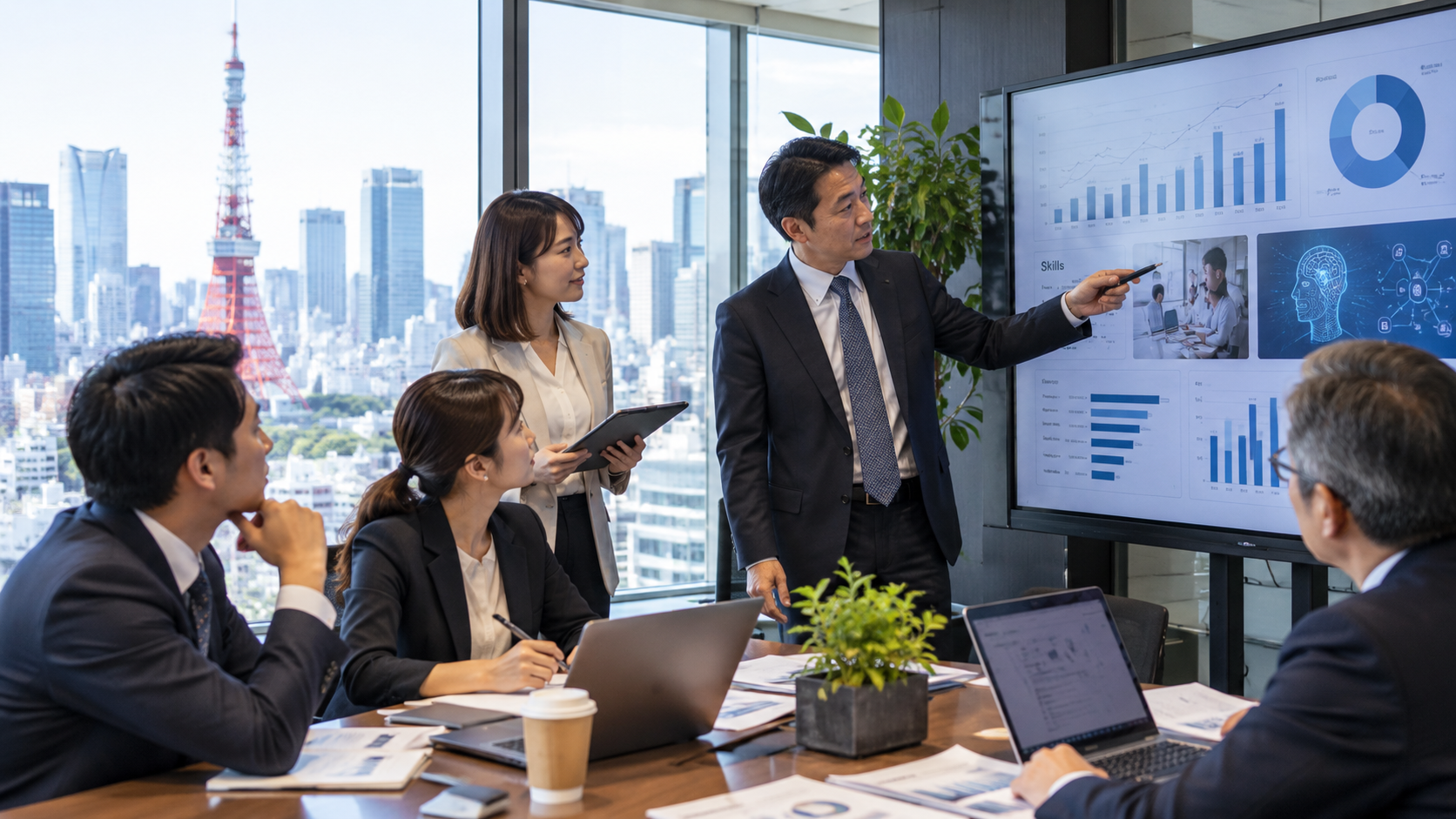
For decades, workforce planning followed a relatively predictable structure. Organizations forecast how many employees they would need, identified the positions required and recruited people whose experience matched clearly defined job descriptions. That model worked reasonably well when jobs changed gradually. Artificial intelligence is challenging that assumption. Across Singapore, India, Malaysia, Vietnam and other Asian economies, technology is changing individual tasks faster than many organizations can rewrite the roles containing them. This distinction matters because AI does not necessarily replace an entire occupation at once. It may automate one responsibility, accelerate another and make a third more important. An employee who previously spent significant time preparing reports may increasingly use AI to produce an initial analysis and spend more time interpreting results, questioning assumptions and communicating recommendations. The job may still exist, but the skills required to perform it successfully have changed.
For HR leaders, this means traditional headcount planning provides only part of the picture. Knowing that an organization will require 200 employees in a particular function is useful, but it does not explain which capabilities those employees will need or how those requirements may evolve. Future workforce planning will increasingly need to answer a different set of questions: which tasks are changing, which skills are becoming more valuable, where those capabilities already exist and which gaps can realistically be developed internally. Singapore offers a particularly relevant environment for this transition. Organizations operating in its highly digital and internationally connected economy are increasingly exposed to AI-enabled tools, automation and regional competition for specialist skills. Recruiting every new capability externally may be expensive and increasingly difficult. Understanding the skills already present inside the organization therefore becomes strategically important.
This requires HR teams to look beyond job titles. Two employees with identical designations may possess very different capabilities. One may have strong analytical ability while another excels at stakeholder communication. A third may have developed automation skills through projects that never appeared in their formal job description. Traditional HR records often fail to capture this hidden capability. Skills visibility can change that. Organizations can begin developing a clearer understanding of what employees can actually do rather than relying entirely on what positions they currently occupy. This does not require creating an enormous database containing every possible skill. A practical starting point is identifying the capabilities most important to the organization's future strategy and understanding where they currently exist.
Building the Workforce Around Capabilities
Once organizations understand their skills base, workforce planning becomes more dynamic. A future capability gap does not automatically become a recruitment requirement. HR leaders can first determine whether existing employees could develop the necessary skills, whether people could move internally or whether technology itself could redesign the work. This creates several possible responses to workforce demand. Organizations can recruit, reskill, redeploy, automate or combine these approaches. The decision becomes less about filling a predefined vacancy and more about finding the best way to access a capability.
Internal mobility becomes particularly important in this environment. Employees whose roles are changing because of automation may possess valuable organizational knowledge that would be expensive to replace. Rather than viewing those employees only through the responsibilities technology may reduce, organizations can examine which of their existing skills are transferable to emerging areas of work. Consider an operations professional whose administrative responsibilities become increasingly automated. That person may already understand processes, customers and internal systems extremely well. With additional development in data analysis or digital workflow management, they could potentially move into a higher-value role connected to process improvement. AI has not simply eliminated work; it has changed where human contribution creates the most value.
Learning strategies must therefore become more closely connected to workforce planning. Generic course catalogues will remain useful, but organizations increasingly need targeted development around capabilities they expect to require. Employees should understand why particular skills matter and where those skills could create future career opportunities. Managers also have a role. They often have the best understanding of employees' practical capabilities, but they may also be reluctant to release strong performers into other parts of the organization. Future-ready workforce planning requires managers to think beyond their immediate teams. Developing someone who eventually moves into another function should be viewed as strengthening organizational capability rather than losing talent.
Designing Work for Human and AI Collaboration
The next stage of workforce planning will not simply involve identifying which jobs humans perform and which jobs AI performs. In many cases, the future will involve humans and technology working together within the same role. This makes distinctly human capabilities increasingly important. Judgement, empathy, creativity, negotiation, ethical reasoning, leadership and contextual understanding become valuable when technology handles more routine information processing. Technical literacy will matter, but so will the ability to decide when AI should and should not be trusted. Organizations therefore need balanced skill strategies. Training everyone only in technical tools may be as limiting as ignoring technology altogether. Employees need enough AI literacy to work confidently with emerging systems while continuing to strengthen the human capabilities that complement them.
Workforce planning also needs to acknowledge uncertainty. No HR team can predict exactly how every occupation will change over the next five years. Technology is moving too quickly. Instead of attempting perfect forecasts, organizations can build adaptability into the workforce itself. Employees who know how to learn, managers who support mobility and organizations that understand their internal capabilities will be better positioned to respond when requirements change unexpectedly. This represents a significant shift in how HR contributes to business strategy. Workforce planning is no longer simply about ensuring the organization has enough people. It is increasingly about ensuring the organization has access to the right capabilities at the right time and multiple ways of building them. Across Asia, where digital transformation is occurring alongside intense competition for talent, this capability based approach could become an important advantage. Companies that understand their workforce at the level of skills can make more informed decisions about recruitment, development, technology investment and organizational design. Artificial intelligence will undoubtedly change jobs. Some responsibilities will disappear, others will emerge and many will simply evolve.
The organizations best prepared for that future may not be those that predict every change correctly. They will be those that create workforces capable of changing with it.
In the AI era, the most important workforce planning question may no longer be “How many people do we need?” but “What capabilities will we need and how will we build them?”
