

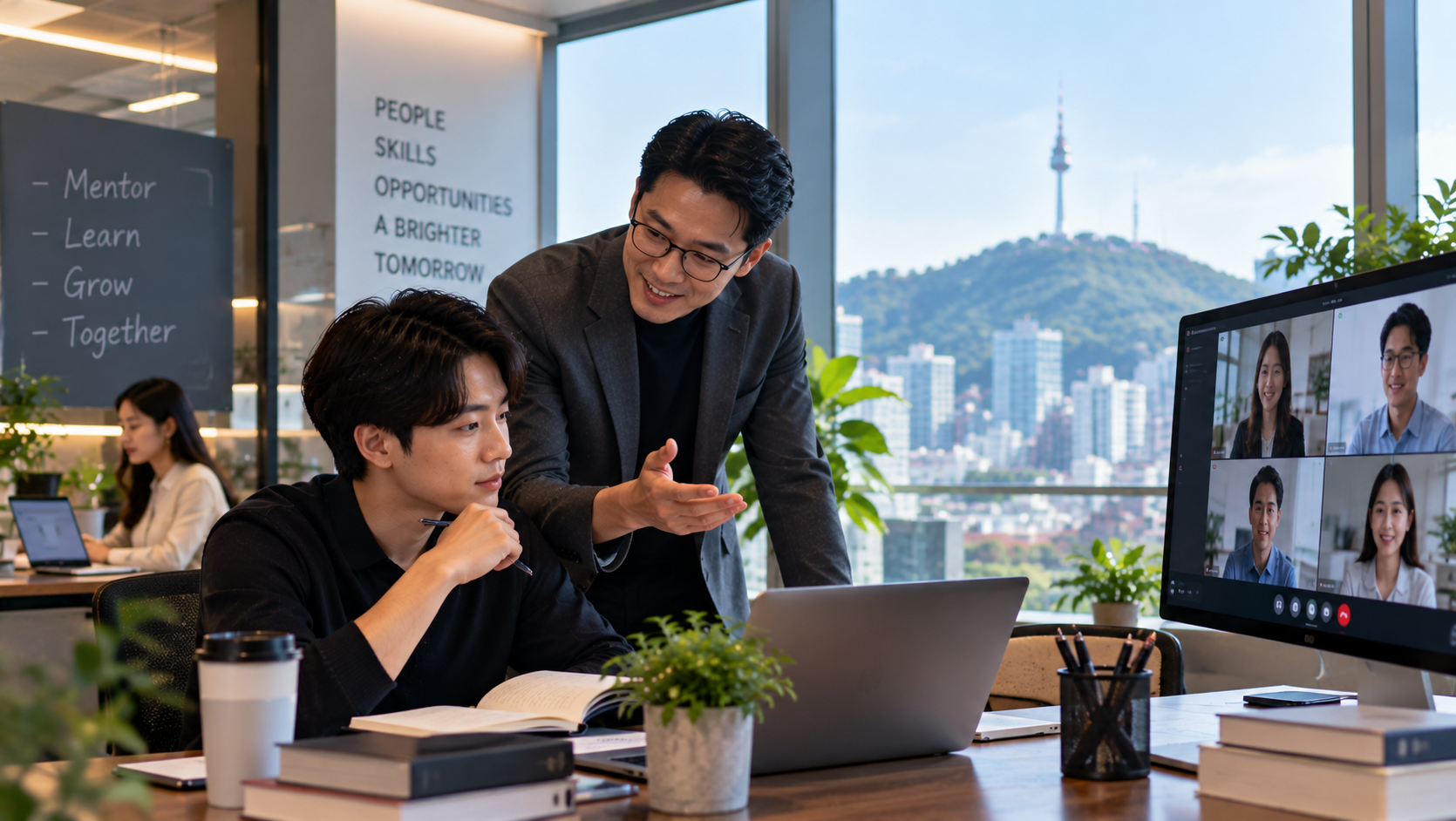
South Korea's rapidly evolving business environment presents an important opportunity for organizations to rethink how employees learn from one another. Across Seoul, Busan and other major commercial centers, businesses operating in technology, manufacturing, finance and professional services are adapting to changing skill requirements and increasingly digital workplaces. Traditional mentorship has often depended on experienced employees guiding junior colleagues through direct workplace interaction, but modern communication platforms are making it possible to extend these relationships beyond physical office locations. Digital mentorship allows employees to connect through virtual discussions, collaborative learning platforms and structured development programmes, creating opportunities for professional guidance regardless of where participants work. This approach can be particularly valuable for organizations managing multiple offices, distributed teams or employees with different working arrangements. Rather than replacing personal relationships, technology can make mentorship more accessible, allowing experienced professionals to share industry knowledge, leadership insights and practical expertise with employees who might otherwise have limited access to senior colleagues.
Connecting Experience With Emerging Talent
Successful digital mentorship requires more than arranging occasional online meetings between senior and junior employees. Organizations need to create meaningful relationships supported by clear development objectives, regular communication and opportunities to apply new knowledge. In South Korean workplaces, where professional experience, seniority and organizational relationships can influence career development, structured mentorship can provide employees with greater access to guidance while encouraging more open communication across different levels of the business. HR teams can support these initiatives by identifying suitable mentors, matching employees according to development interests and encouraging conversations about career progression, technical capabilities and workplace challenges. Digital platforms can also support reverse mentoring, where younger professionals share their knowledge of emerging technologies, artificial intelligence and digital communication with experienced leaders. This exchange creates opportunities for learning in both directions and can help organizations combine established professional expertise with new perspectives. When mentorship is treated as an ongoing relationship rather than a formal administrative exercise, it can strengthen employee confidence, encourage collaboration and make professional development a more natural part of organizational culture.
The future of digital mentorship in South Korea will depend on how effectively organizations combine technological convenience with genuine human connection. While virtual platforms make communication easier, meaningful development still requires trust, active listening, constructive feedback and a shared commitment to learning. Business leaders should ensure that digital mentorship remains inclusive and accessible to employees across different departments, career stages and working locations. Organizations can also connect mentorship initiatives with succession planning, leadership development and internal career mobility to create clearer opportunities for professional growth. However, technology should support rather than replace personal interaction, particularly when sensitive career discussions or complex workplace challenges require deeper understanding. By encouraging experienced employees to share knowledge and helping emerging professionals develop new capabilities, South Korean organizations can build stronger learning cultures that support both individual ambition and long term business performance. As workplaces become increasingly digital, the organizations that invest in meaningful mentorship relationships may be better positioned to retain institutional knowledge, develop future leaders and prepare their people for the changing world of work.