

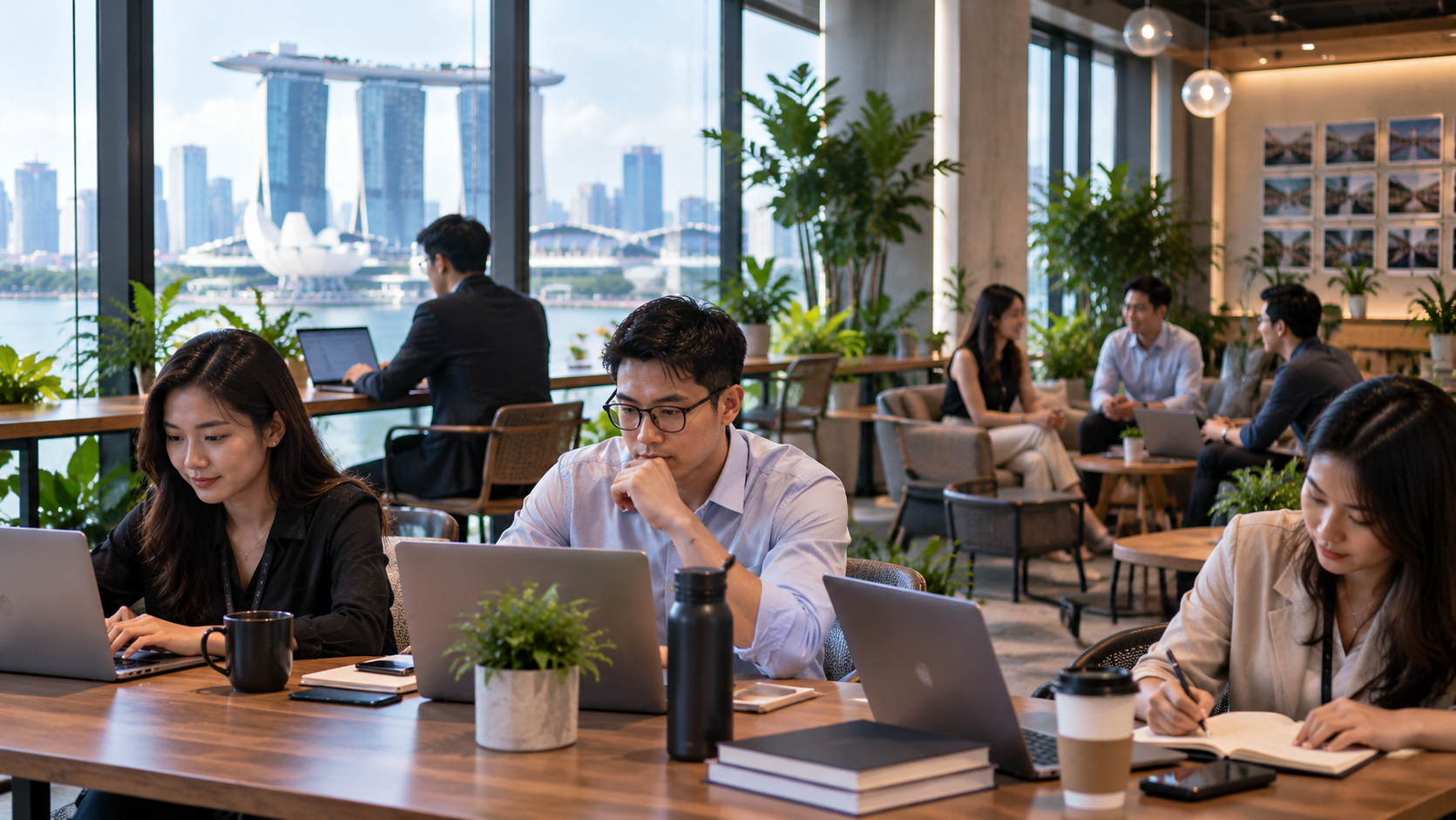
Singapore's position as a major international business hub makes it an important setting for exploring how workplace flexibility could evolve across Asia. As organizations adopt advanced digital technologies and increasingly collaborate with professionals across different locations, the traditional relationship between employment and physical office space is being reconsidered. Work from anywhere arrangements offer employees the possibility of performing suitable responsibilities from different locations while remaining connected to their teams through digital platforms. Unlike conventional remote work, which often involves working from home within the same country, work from anywhere can extend to coworking spaces, regional offices and, where permitted, international locations. For businesses operating in Singapore's highly connected economy, this model may create opportunities to access specialist talent, support employee flexibility and build more geographically diverse teams. However, successful implementation requires more than providing laptops and communication software. Organizations must establish clear expectations around performance, information security, communication, employee availability and the legal requirements associated with working across borders.
Creating a Workplace Without Traditional Boundaries
The growing interest in location flexibility is encouraging HR leaders to reconsider how organizations maintain productivity, collaboration and employee engagement when colleagues are not always physically present. In Singapore's professional services, technology and regional business sectors, digital collaboration tools can enable employees to participate in projects, attend meetings and exchange knowledge across different locations. Nevertheless, flexibility needs to be supported by effective management practices and clearly defined responsibilities. Managers must evaluate employees through meaningful outcomes rather than physical visibility, while ensuring that distributed team members receive fair access to career development, recognition and leadership opportunities. Organizations should also recognize that not every role is suitable for unrestricted location flexibility, particularly where operational requirements, customer service responsibilities or regulatory obligations demand physical presence. HR teams can address these differences by developing practical policies that distinguish between remote work, hybrid arrangements and temporary international working permissions. When designed carefully, location flexibility can become part of a broader employee experience strategy rather than simply an additional workplace benefit.
The future of work from anywhere in Singapore will depend on how effectively organizations balance flexibility with operational responsibility and organizational culture. While technology makes distributed collaboration increasingly practical, successful teams still require trust, communication, professional relationships and opportunities for meaningful interaction. Business leaders should therefore consider how employees remain connected to organizational values, receive mentoring and develop a sense of belonging when working across different locations. International arrangements also require careful attention to immigration permissions, taxation, employment obligations and data protection requirements, which may differ between countries. Rather than adopting unrestricted flexibility, organizations can introduce structured arrangements that support suitable roles while maintaining business continuity and compliance. As Singapore continues to serve as a regional center for international business, the ability to manage geographically distributed talent could become an increasingly valuable organizational capability. Ultimately, the future of work may not be defined by eliminating offices, but by creating workplaces where location supports productivity, employee choice and business performance rather than unnecessarily limiting them.