
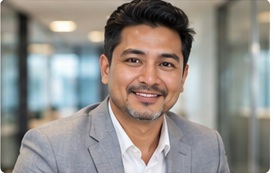
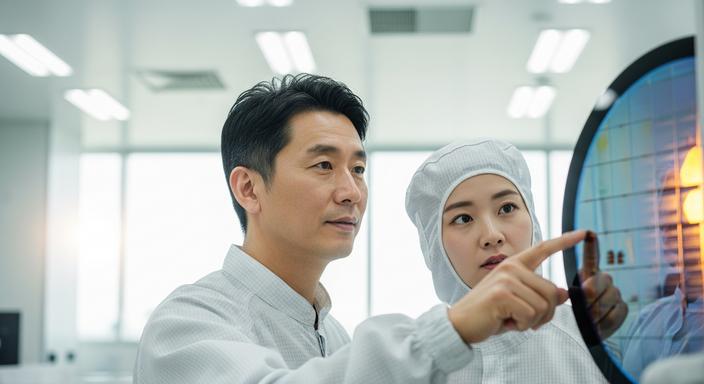
Taiwan’s position at the center of the global semiconductor industry has made workforce capability one of the most important considerations for business leaders operating in advanced technology and precision manufacturing. With semiconductor production, engineering innovation, and sophisticated electronics manufacturing playing vital roles in its economy, Taiwan offers an important perspective on how organizations can build highly specialized workforces while responding to rapid technological change. In industrial centers such as Hsinchu, Taichung, and Tainan, companies must continuously evaluate their ability to attract experienced engineers, develop emerging technical professionals, and maintain the organizational expertise required to support complex manufacturing operations. In this illustrative executive interview, the central discussion explores a fundamental leadership question: how can organizations sustain innovation when competition for specialized talent is intense and technological requirements are constantly evolving? From the perspective of a senior technology executive, the answer begins with recognizing that workforce development cannot be separated from business strategy. Semiconductor manufacturing requires highly coordinated contributions from research specialists, process engineers, equipment professionals, quality teams, production managers, and technical support employees. When organizations face capability gaps in these areas, the consequences can extend beyond recruitment challenges to affect operational efficiency, production reliability, and future investment plans. Consequently, HR leaders must work closely with executive management to understand long term technological priorities and identify the capabilities employees will need in the years ahead. Rather than treating hiring as the primary response to every emerging business requirement, organizations can strengthen their internal development systems through structured engineering training, technical mentoring, university partnerships, and skills-based career progression. The executive perspective presented here suggests that Taiwan’s technology businesses should focus not only on attracting talented graduates and experienced professionals but also on creating workplaces where employees can continuously expand their expertise. This is particularly important in an industry where specialized knowledge is developed through practical experience and where the ability to solve complex technical challenges depends on collaboration across multiple functions. By positioning workforce development as a strategic investment rather than an administrative HR activity, technology leaders can establish stronger foundations for sustainable growth and innovation.
A second important theme in this executive perspective concerns employee retention, leadership development, and the changing expectations of highly skilled professionals. In specialized technology environments, retaining experienced employees is essential because their technical judgement, process knowledge, and understanding of organizational systems may be difficult to replace quickly. However, a successful retention strategy should extend beyond competitive remuneration and financial incentives. Engineers and technology professionals may also value challenging assignments, opportunities to participate in innovative projects, clear career pathways, supportive management, and access to continuous professional development. For Taiwanese organizations, this creates an opportunity to rethink how career progression is structured, particularly in environments where traditional advancement may be closely associated with movement into supervisory positions. Not every highly capable technical professional wants to become a people manager, and companies risk losing valuable expertise when managerial promotion becomes the only recognized path to seniority and professional success. The executive approach explored here supports the development of dual career pathways that allow employees to progress either through technical specialization or leadership responsibilities. An experienced process engineer in Hsinchu, for example, could advance into a senior technical expert position while continuing to mentor younger professionals and contribute to complex manufacturing improvements. At the same time, employees demonstrating strong people management potential could receive structured development in communication, coaching, decision-making, and cross functional leadership. This distinction can help organizations recognize different forms of professional contribution while strengthening both technical capability and management effectiveness. Employee wellbeing must also form part of the discussion, particularly in demanding industrial environments where production deadlines, shift requirements, and complex operational responsibilities can create considerable workplace pressure. Senior executives and HR leaders should therefore examine workload distribution, manager effectiveness, employee feedback, and opportunities for meaningful career development as interconnected elements of workforce sustainability. A culture that encourages knowledge sharing, recognizes individual expertise, and supports employees during challenging periods can strengthen trust and professional commitment. For technology organizations operating in Taiwan’s competitive labor market, the long term objective should be to create an employee experience in which skilled professionals see genuine opportunities to contribute, develop, and build lasting careers rather than viewing external job changes as their only route to advancement.
Looking ahead, Taiwan’s semiconductor industry provides an important example of why the future of executive leadership will increasingly depend on the ability to combine technological ambition with thoughtful people strategy. As artificial intelligence, advanced manufacturing systems, and increasingly complex semiconductor technologies reshape the capabilities required across the industry, business leaders must ensure that workforce planning remains adaptable and forward-looking. In this illustrative executive discussion, the greatest leadership challenge is not simply predicting which technical roles will be required in the future but creating an organizational culture capable of learning and adapting as those requirements change. This involves strengthening cooperation between HR departments, engineering leadership, business operations, and educational institutions to build more sustainable talent pipelines. Organizations can introduce practical development programmed that connect experienced professionals with emerging talent, provide opportunities for cross functional exposure, and encourage employees to participate in continuous improvement and technology innovation. Workforce analytics can also support executive decisions by identifying critical skill shortages, monitoring internal mobility, assessing leadership readiness, and evaluating retention trends within specialized technical teams. Nevertheless, data driven workforce management should remain grounded in sound human judgement and transparent decision making. Employees need to understand how organizational changes affect their careers, what support is available, and how their contributions align with broader business objectives. Leadership teams that communicate openly and involve employees in transformation initiatives may be better positioned to maintain workforce confidence during periods of rapid technological change. For organizations across Asia, Taiwan’s experience highlights a wider strategic lesson: sophisticated technology alone does not guarantee long term competitive advantage. Behind every advanced manufacturing operation is a workforce whose knowledge, commitment, collaboration, and professional development determine how effectively innovation becomes commercial success. The next generation of influential technology executives will therefore need to treat human capability as an essential component of industrial strategy. By investing in specialized talent, recognizing different career ambitions, developing capable managers, and supporting a culture of continuous learning, Taiwan’s business leaders can help build organizations that remain resilient and competitive in an increasingly complex global technology environment.
Comments 0
Share a thoughtful perspective with the HR360 community.
Be the first to share your perspective.